Introduction
Cold chain logistics represents a critical but often overlooked system ensuring temperature-sensitive products remain viable throughout distribution. When failures occur—spoiled food, compromised pharmaceuticals, or damaged temperature-sensitive goods—the consequences become immediately apparent.
Specialized forklifts designed for frozen storage environments form a crucial component of this infrastructure. In Denver's expanding cold storage, food distribution, and pharmaceutical sectors, selecting appropriate material handling equipment directly impacts operational efficiency and product integrity.
Understanding Cold Chain Logistics in Frozen Storage
Cold chain logistics encompasses controlled movement and storage of temperature-sensitive goods across supply networks. Frozen storage typically maintains temperatures well below freezing, frequently reaching -20°F or colder for products including frozen foods, seafood, vaccines, biologics, and specialty chemicals.
Within frozen warehouses, forklifts continuously transfer pallets between freezers, loading docks, and staging areas. This creates distinctive operational challenges, as equipment must endure extreme temperatures without performance degradation while operators require protection from harsh conditions and must maintain productivity despite slower reaction times.
Limitations of Standard Forklifts in Freezer Environments
Standard forklifts reveal significant weaknesses when deployed in frozen facilities. Cold temperatures thicken lubricants, diminish battery efficiency, stiffen seals and hoses, and increase condensation when equipment transitions between temperature zones. These factors accumulate into chronic maintenance issues and unexpected failures.
Electric forklifts with conventional lead-acid batteries demonstrate substantial capacity loss in cold storage, delivering considerably less runtime than specifications indicate. Internal combustion models face fuel efficiency problems and increased emissions—problematic in indoor facilities with strict environmental controls. Additionally, inadequate operator protection in non-specialized equipment creates safety and comfort concerns.
Features of Cold-Specialized Forklifts
Purpose-built frozen storage forklifts incorporate cold-specific engineering throughout their design. Insulated wiring prevents cracking, reinforced seals block moisture intrusion, and specialized lubricants maintain effectiveness at low temperatures. Control systems typically include protection from condensation-related failures during temperature zone transitions.
Operator cabs represent another critical component. Many cold storage models feature fully enclosed designs with integrated heating, defrosters, and insulation. Beyond comfort, these amenities enhance operator focus, extend productive work capacity, and reduce accident risk.
Electric Forklifts and Modern Battery Technology
Looking for the right lift for your operation?
Patriot Forklifts dealers can walk you through every model in the lineup and spec the right machine for your application.
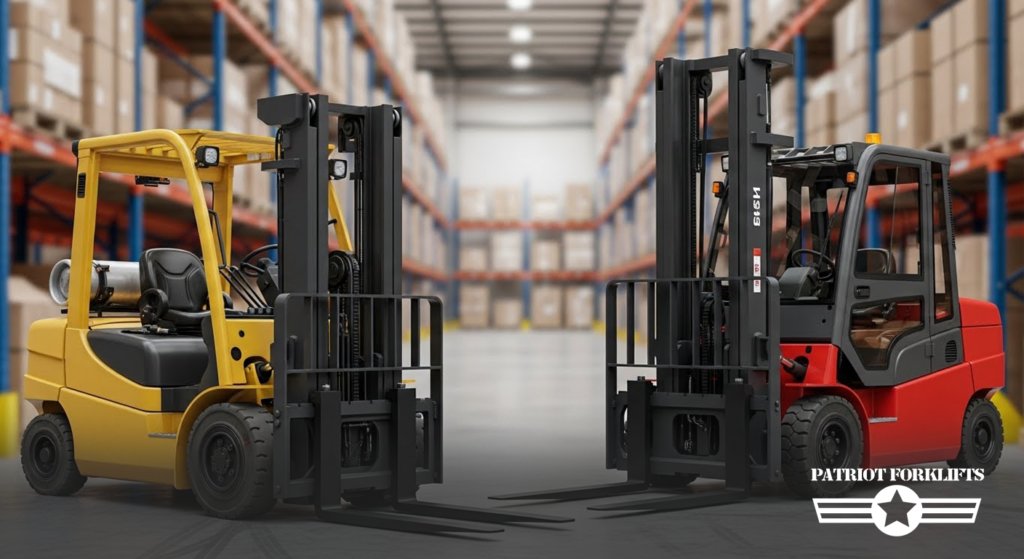
Electric forklifts generally represent optimal choices for indoor frozen storage, producing zero emissions and operating quietly. However, performance varies significantly among models—not all electric forklifts withstand cold conditions effectively.
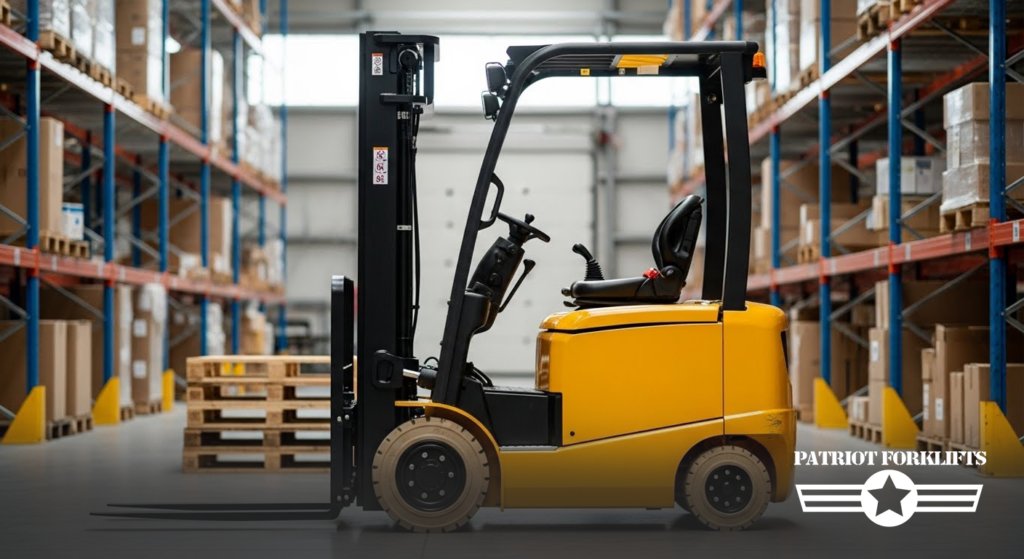
Contemporary electric models designed for freezer use incorporate insulated battery compartments, protected electronics, and cold-rated components. Modern lithium-ion battery systems maintain superior performance consistency in cold environments compared to lead-acid alternatives. These batteries charge faster, require no maintenance, and deliver more reliable multi-shift operation—particularly valuable for facilities operating continuous schedules.
Internal Combustion Equipment in Cold Logistics
While electric solutions dominate indoor applications, propane and gas-powered forklifts retain relevance in specific cold chain scenarios. Outdoor freezer yards, loading docks, and facilities lacking charging infrastructure may depend on internal combustion equipment for operational continuity.
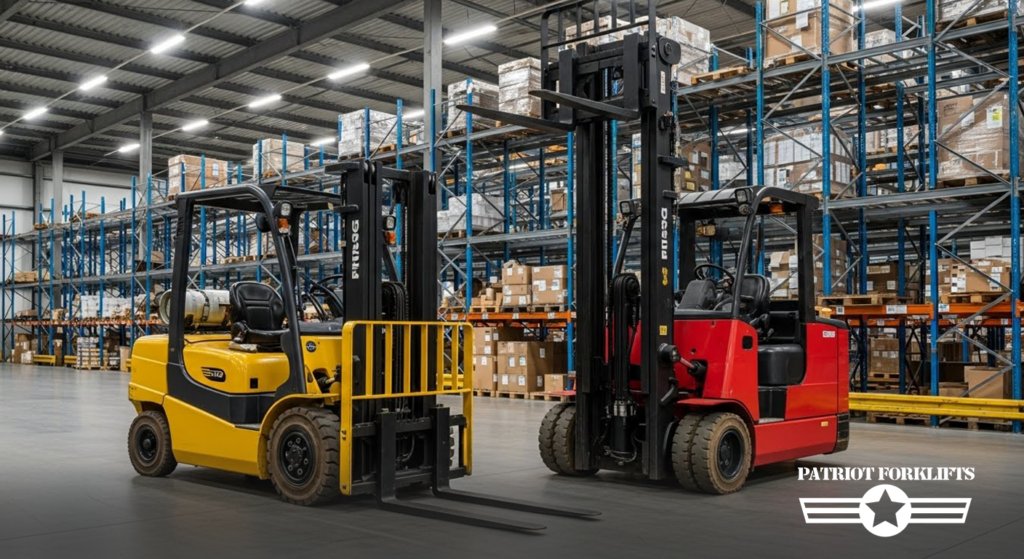
Cold-rated internal combustion models include modified fuel systems, enhanced cold-start components, and advanced filtration for freezing temperatures. However, ventilation requirements limit their use near enclosed spaces. Some Denver-area facilities operate hybrid fleets combining electric and internal combustion equipment for flexibility across varying seasonal demands and temperature zones.
Operator Safety and Ergonomic Considerations
Safety becomes paramount in frozen environments where ice accumulation, reduced visibility, bulky protective clothing, and diminished reaction speeds heighten accident risks. Specialized designs address these hazards through thoughtful engineering and advanced safety systems.
Enclosed cabs protect against frostbite and fatigue, while heated controls prevent stiff handling. Anti-slip steps, enhanced lighting, and high-visibility masts facilitate safe navigation through narrow freezer aisles. Advanced traction control systems reduce skidding risks on icy surfaces.
Equipment safety investments yield measurable returns through reduced injuries, lower insurance expenses, and improved workforce morale.
Maintenance Requirements for Cold Storage Equipment
Frozen environments demand modified maintenance approaches. Cold temperatures accelerate component wear while potentially masking early failure indicators. Condensation forming during temperature transitions creates corrosion and electrical hazards.
Specialized equipment design minimizes these risks, though consistent preventive maintenance remains essential. Protocols include using cold-rated fluids, frequent seal and hose inspection, and proper battery system insulation. Scheduling maintenance during warmer periods or within heated service areas extends equipment lifespan.
Configuration Selection for Specific Facilities
Cold storage operations possess individual characteristics requiring tailored equipment solutions. Ceiling heights, aisle widths, pallet dimensions, and throughput requirements all influence forklift selection decisions.
Mast selection proves particularly significant in high-racking frozen warehouses, where cold-rated designs ensure smooth lifting at maximum heights. Reinforced chains and rollers withstand freezing-related stress. Tire selection substantially impacts performance, as solid tires often outperform pneumatic options in cold conditions through superior crack resistance and traction maintenance.
Financing Solutions for Equipment Acquisition
Specialized cold storage forklifts represent substantial capital investments, particularly when equipped with advanced features. Financing enables businesses to deploy appropriate equipment without creating cash flow strain, especially crucial for cold storage where equipment reliability directly protects inventory value and customer relationships.
Financing arrangements allow cost distribution over extended periods while providing immediate operational benefits. For Denver-area companies, this approach offers practical pathways to modernizing cold chain capabilities.
Conclusion
Cold chain logistics success depends fundamentally on specialized equipment engineered for extreme thermal environments. From electric forklifts featuring advanced battery technology to cold-rated components and operator-focused designs, proper equipment selection directly impacts temperature maintenance, inventory protection, and operational consistency.
Patriot Forklifts provides Denver-area businesses with expertise, equipment selection, financing options, and comprehensive support for cold storage operations. Professional guidance helps local companies invest confidently in solutions supporting sustained productivity and reliability in frozen logistics.