Understanding the Key Differences: Construction Sites vs. Warehouses
Construction sites operate outdoors on rough, unpredictable terrain with uneven ground, mud, and snow. Equipment must handle heavy, irregular loads like lumber and steel beams while adapting to changing weather conditions. Warehouses, by contrast, feature controlled indoor environments with smooth concrete floors where speed, efficiency, and space utilization take priority.
Colorado's unique factors—elevation above 5,000 feet and winter weather—influence equipment selection. The altitude reduces engine power in traditional models by approximately 3% per 1,000 feet elevation, making electric options more attractive indoors while construction sites favor diesel for raw power.
Best Forklift Types for Construction Sites
Rough Terrain Forklifts
These machines feature large pneumatic tires, high ground clearance, and four-wheel drive capability. They excel on gravel, mud, dirt, and uneven surfaces common at Denver-area development sites. Lift capacities range from 5,000 to 10,000 pounds or more, with many models offering enclosed cabs with heaters for Colorado winters.
Telehandlers
Combining forklift lifting capacity with crane-like reach, telescopic handlers extend booms up to 50 feet or higher. They're ideal for roofing work, HVAC placement, and material delivery to upper floors on mid-rise projects. These units maneuver around obstacles while reducing dependency on additional cranes.
Diesel-Powered Heavy-Duty Models
For the heaviest lifting tasks—moving precast concrete sections or steel coils—heavy-duty diesel forklifts offer capacities from 15,000 to 50,000+ pounds. Their robust frames handle Colorado's roughest conditions reliably.
Best Forklift Types for Warehouses
Electric Counterbalance Forklifts
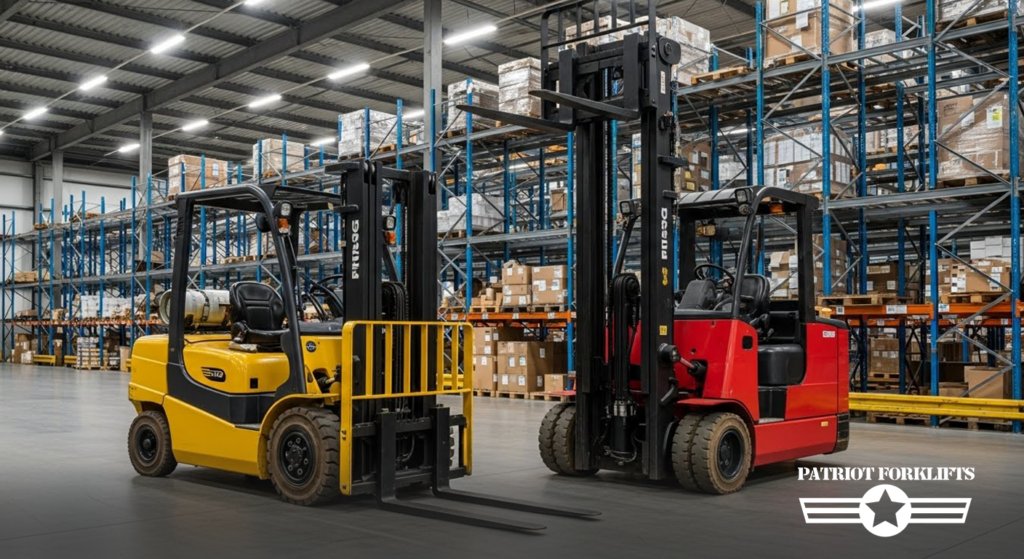
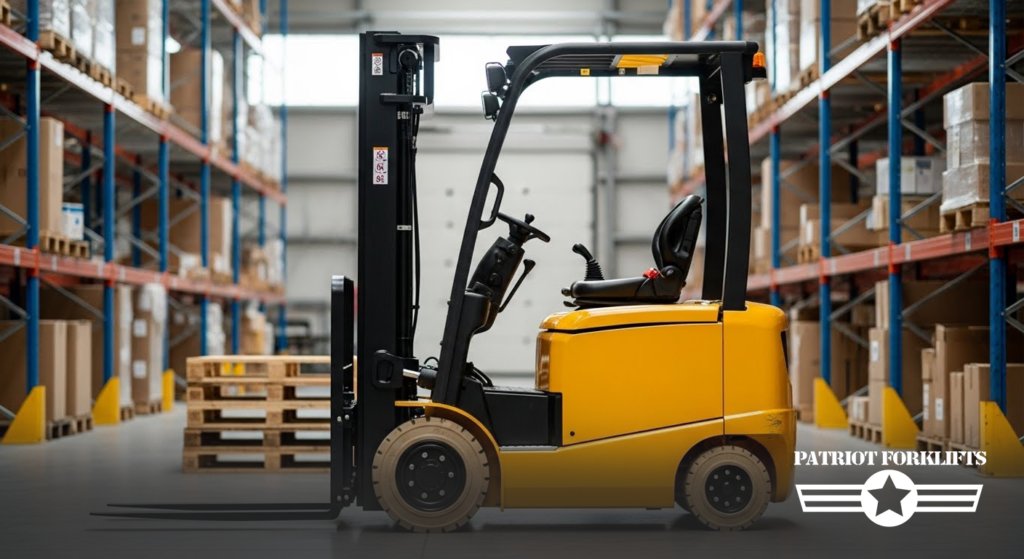
Standard warehouse workhorses, these three- or four-wheel models offer zero emissions and quiet operation. Three-thousand to 10,000-pound capacities suit most applications. Lithium-ion battery technology enables fast charging and extended run times, minimizing shift downtime.
Looking for the right lift for your operation?
Patriot Forklifts dealers can walk you through every model in the lineup and spec the right machine for your application.
Reach Trucks and Order Pickers
Reach trucks extend forks into deep racks, enabling storage up to 30–40 feet in narrow 9–10 foot aisles. Order pickers elevate operators alongside goods for individual item selection—essential for e-commerce fulfillment centers handling thousands of small packages daily.
Narrow-Aisle and Very Narrow-Aisle Models
VNA forklifts operate in aisles as tight as 5–6 feet using swing-mast or turret heads that rotate forks 90 degrees. These specialized units maximize storage density without expensive warehouse expansions, particularly valuable for facilities near Denver International Airport.
Key Factors to Consider
Safety features differ significantly between applications. Construction equipment prioritizes stability on uneven terrain with side-shift capabilities and four-wheel drive. Warehouse machines emphasize operator presence systems, blue spot lights, and collision avoidance for high-traffic indoor areas.
Fuel type varies by use: diesel dominates construction sites; electric leads in warehouses for cleanliness and lower operating costs. Attachments also differ—construction needs truss booms and buckets; warehouses favor slip-sheet attachments and rotators.
Maintenance requirements distinguish the two: construction equipment needs frequent checks due to harsh treatment, while warehouse fleets benefit from scheduled battery and tire maintenance preventing peak-season breakdowns.
FAQ
What forklift suits rough terrain construction sites in Colorado?
Rough terrain models with large pneumatic tires and four-wheel drive handle mud, gravel, snow, and slopes effectively. Enclosed cabs with heaters provide winter comfort.
Are electric forklifts suitable for outdoor construction work?
Generally no. Electric models struggle with rough terrain, weather exposure, and extended outdoor shifts. Diesel-powered rough terrain or telehandlers perform far better.
How do I choose between telehandlers and rough terrain forklifts?
Select telehandlers for high-reach and precise placement needs. Choose rough terrain forklifts for straightforward heavy lifting on uneven ground.
What maintenance differences exist between warehouse and construction forklifts?
Construction machines require frequent tire, hydraulic, and undercarriage inspections. Warehouse forklifts need regular battery maintenance, brake inspections, and mast lubrication.
Can I finance forklifts for both uses in Denver?
Yes. Patriot Forklifts offers customized financing, leasing, and rental plans accommodating both industries and project timelines.
Conclusion
Matching equipment to environment determines success. Construction demands rugged power; warehouses require efficiency. Patriot Forklifts provides Denver-area expertise in both sectors, offering "customized financing and no-obligation quotes" for your operation's unique needs.